

What Does It Mean To Be A Light In The Dark?
Move beyond the impulse for external fixes. Through Anapanasati and Tonglen, learn to anchor resilience in breath and cultivate presence amid chaos.
When you’re suddenly facing a job loss or dealing with a wave of harsh criticism, the natural reaction is to look for a quick, external fix—a rescue that makes the problem go away overnight. We often spend our energy waiting for a sudden shift in circumstances to bring back a sense of security.
Real progress is usually much more practical and closer to home. A daily routine that protects your focus and keeps you steady when things feel chaotic matters more than any grand solution. You don’t need every answer; you just need a small, consistent point of clarity to return to.
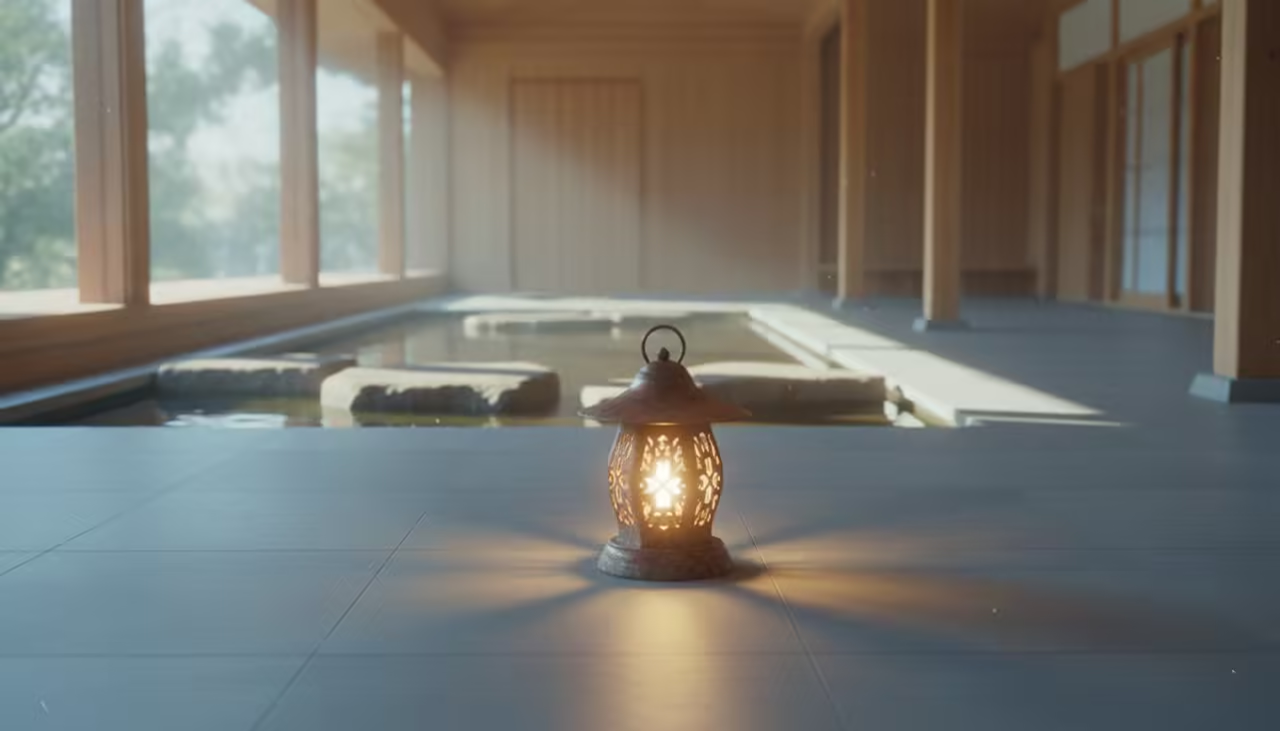
Light and Shadow
We usually treat darkness as a flaw—something to be fixed or overcome. But light and shadow aren’t competing with each other. They are different aspects of the same environment. One gives the other its definition.
This is the practical side of the Yin and Yang concept. A shadow isn’t a hostile force. It’s the shape created when light meets an object. The difficulties we face work the same way: they aren’t interruptions to our lives, but the very things that give our resilience its shape.
In Eastern philosophy, this constant friction is known as Dukkha. While often translated as “suffering,” it feels more like a wheel that’s slightly out of alignment or a shoe that doesn’t quite fit. It’s a baseline condition, as natural as wind or rain. Expecting a life without this underlying tension is like trying to walk on a surface with no friction; it’s simply not how the terrain is built.
When you stop trying to eliminate the shadows, you stop wasting energy on a fight you can’t win. This lets you focus on the only thing you can actually control: the quality of your own presence.
Practicing Inner Stability
This sense of steadiness isn’t a personality trait or something you’re born with. It’s a skill developed through small, repetitive actions. Think of it as preparing for a storm—you don’t wait for the wind to pick up before you check the structural integrity of your house. You build that strength during the quiet times.
The most direct way to build this foundation is through Anapanasati, or mindfulness of breathing, a practice detailed in the Anapanasati Sutta. The mechanics are simple: place your attention on the physical sensation of air moving at the tip of your nostrils, or on the rise and fall of your belly. You aren’t trying to manipulate your breath or reach an altered state. You’re training your attention to stay with one specific, physical point of reference that is always available, regardless of what’s happening around you.
By returning to that point over and over, you build a baseline of composure. When things get chaotic—a sudden job loss, a difficult conversation—that baseline is what holds. The practice creates an internal space that remains undisturbed even when the situation isn’t. It’s the difference between being tossed around by the waves and having an anchor that holds firm on the seabed.
But stability on its own can feel a bit clinical. The practice gains its real depth through Bodhicitta, often called the “awakened heart.” Rather than just sitting in silence for your own sake, Bodhicitta is the intention to keep your heart open to the reality of suffering—both your own and others’. This shift turns a simple breathing exercise into a way of staying connected and responsive, rather than just becoming indifferent.

Stability Under Pressure
Finding a sense of peace during a quiet morning is one thing, but maintaining it when everything is going wrong is the real work. When you’re hit with sudden anxiety or a wave of anger, the natural reaction is to either react impulsively or shut down entirely. This is where the training pays off.
Instead of trying to fight the emotion or run from it, you simply allow it to exist within your field of awareness. You acknowledge the pressure without letting it dictate your next move. By sticking to the physical sensation of your breath, you keep yourself grounded while the situation plays out. You aren’t ignoring the problem; you’re just refusing to let it become your entire reality.
A more advanced method for this is Tonglen, a Tibetan practice often translated as “taking and sending.” As you breathe in, you lean into the difficulty or the pain you’re experiencing, accepting it fully into your awareness. If you’re a beginner and find that “taking in” negative energy makes your chest feel tight or constricted, don’t force it—just shift your focus back to your belly breathing until you feel more settled.
On the out-breath, you release that tension and offer a sense of space or ease. This practice changes your relationship with hardship. Instead of seeing pain as a threat to be pushed away, you use it as a point of connection to others who might be feeling the exact same way. It turns an overwhelming moment into a deliberate exercise in empathy and resilience.
The Practical Impact of Calm
When you develop this kind of internal composure, it starts to affect the people around you, usually without you even trying. You don’t need to offer grand advice or have a solution for every problem. Often, simply being the person who doesn’t panic provides a sense of grounding for everyone else in the room. A steady core is harder to shake than it looks from the outside.
This is the practical side of Karunā, or active compassion. Having enough stability to stay present while someone else is struggling is its own form of help. You aren’t trying to steer their ship, but your steadiness gives them something solid to orient by. Calm doesn’t run out when you share it—it actually becomes more established the more you rely on it in difficult moments.

The practice is simple in structure: return to the breath, keep the heart open, repeat. Do that consistently and you become, over time, a steady point of light.
Frequently Asked Questions
What does it truly mean to be 'a light in the dark' when facing life's challenges?+
It signifies cultivating an internal steadiness and clarity, rather than seeking external rescues or quick fixes. Being a light means establishing consistent daily practices that protect your focus and provide an anchor, allowing you to remain grounded and present even amidst significant chaos or criticism.
How can I build resilience and inner stability when experiencing sudden job loss or harsh criticism?+
Resilience is not a fixed personality trait but a skill developed through small, repetitive actions. Focus on creating a daily routine that safeguards your attention. Practices like mindfulness of breathing (Anapanasati) are foundational, training your attention to return to a consistent, physical point of reference, thereby cultivating a baseline of composure that holds during turbulent times.
Why should I view difficulties and 'shadows' not as flaws, but as essential parts of life?+
In the practical application of the Yin and Yang concept, light and shadow are complementary, not competing forces. Difficulties and 'shadows' aren't interruptions; they are the very forces that define and shape your resilience, much like a shadow gives an object its form. This perspective allows you to conserve energy from fighting against what is a natural aspect of existence.
What is Dukkha, and how does understanding it change my approach to life's inherent tensions?+
Dukkha, often translated as 'suffering' in Eastern philosophy, is more precisely an underlying tension or a baseline condition—like a wheel slightly out of alignment. Recognizing it as a natural, ever-present friction, rather than a flaw to be eliminated, frees you to focus on managing the quality of your own presence instead of engaging in an unwinnable fight against life's inherent terrain.
How does mindfulness of breathing (Anapanasati) specifically help in developing composure and focus?+
Anapanasati is a direct and accessible method for training attention. By consistently placing your focus on the physical sensation of your breath—at the nostrils or the rise and fall of the belly—you build an internal point of reference that is always available. This repetitive action cultivates a baseline of composure, creating an internal space that remains undisturbed even when external situations are chaotic.
Beyond personal calm, how can my mindfulness practice extend to others' suffering and foster deeper connection?+
This is where Bodhicitta, often called the 'awakened heart,' comes into play. It's the intention to keep your heart open to the reality of suffering, both your own and that of others. This shift transforms personal stability into a practice of connection and responsive compassion, deepening its impact beyond mere self-quietude.
What is the Tonglen practice, and how can it help me process intense emotions like anxiety or anger without being overwhelmed?+
Tonglen is a Tibetan practice of 'taking and sending.' On the in-breath, you consciously lean into and accept the difficulty or pain you're experiencing; on the out-breath, you release that tension and offer a sense of space or ease. This practice fundamentally changes your relationship with hardship, transforming overwhelming moments into deliberate exercises in empathy and resilience. (Beginners finding it too intense may simply return to belly breathing until settled.)
Can my personal sense of calm and internal stability positively influence the people around me during stressful situations?+
Absolutely. Your internal composure often extends to others without conscious effort. Simply being the steady presence in a room provides a sense of grounding for those experiencing distress. This is Karunā, or active compassion—your stability becomes a subtle, yet powerful, form of help and orientation for others, demonstrating that calm doesn't run out when shared.